 Key Takeaways
- Turf toe is a sprain of the big toe's main joint, the first metatarsophalangeal (MTP) joint, caused when the toe is forcibly bent upward while pushing off.
- Turf toe is graded 1 to 3: Grade 1 is a stretch, Grade 2 a partial tear, and Grade 3 a complete tear of the plantar plate beneath the joint.
- Recovery from turf toe ranges from a few days for Grade 1 to 4–6 weeks or longer for Grade 3, and complete tears can require surgery.
- Turf toe risk rises on firmer, higher-traction surfaces — exactly why playing-surface quality became a flashpoint at the 2026 World Cup.
- Untreated Grade 2–3 turf toe can lead to chronic big-toe stiffness (hallux rigidus), bunion-like deformity, and lasting loss of push-off power.
Why the World Cup Is Talking About Your Big Toe
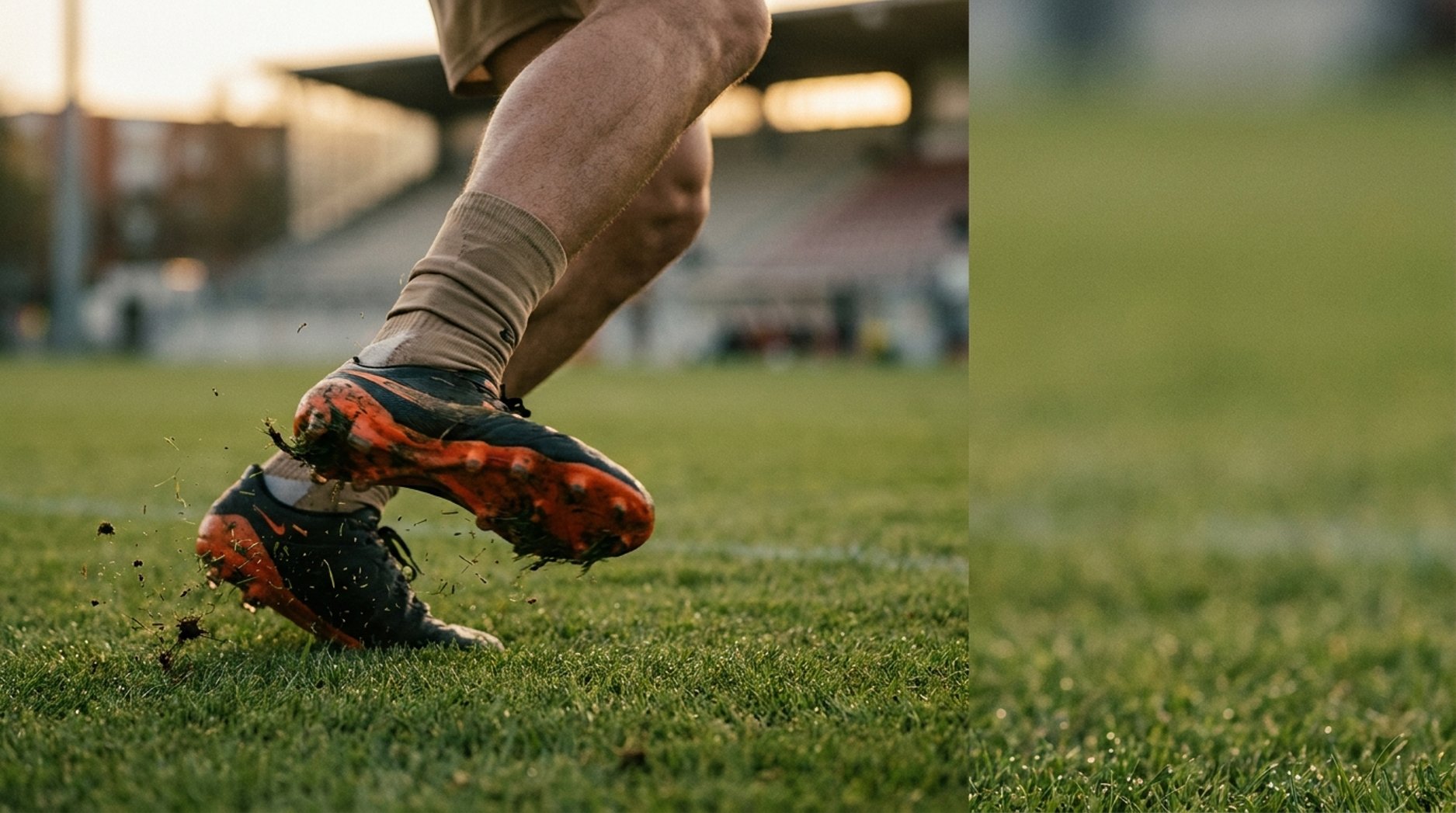
The 2026 FIFA World Cup kicked off June 11 across the United States, Canada, and Mexico, and before a single goal, the loudest debate was the grass under players' feet. To meet FIFA's natural-grass mandate, several NFL stadiums tore out their artificial turf, reigniting a fierce grass-versus-turf argument that the NFL Players Association says is long overdue (NBC Sports and ESPN, June 2026). Hidden inside that surface debate is an injury named for the very thing players were fighting over: turf toe. The same firm, high-traction surfaces that let an athlete plant and explode are the surfaces that jam the big toe into the injury position.
Short answer: Turf toe is a sprain of the big toe's main joint caused when the toe is forced into extreme upward bending, usually while pushing off on a hard surface. It is graded 1 to 3, and recovery ranges from a few days to more than six weeks depending on severity, with complete tears sometimes needing surgery.
The Science: What Actually Tears in Turf Toe
Turf toe is an injury to the plantar complex of the first MTP joint, the cluster of ligaments, the plantar plate, and the two small sesamoid bones that sit under the base of the big toe. When the heel lifts and the toe stays pinned flat on the ground, the joint is driven into forced hyperextension. Push hard enough on a firm surface and the plantar structures stretch, partially tear, or rupture.
Surface matters because of traction. A stickier, less forgiving surface keeps the cleat, and the toe, fixed to the ground while the athlete's momentum carries forward, increasing the bending force across the joint. This is why the condition was first described in American football players on early artificial turf, and why it shows up across soccer, basketball, dance, and any sport with explosive push-off.
Clinicians grade turf toe from 1 to 3. Grade 1 is a stretch of the plantar complex with pinpoint tenderness and mild swelling. Grade 2 is a partial tear with broader tenderness, more swelling, bruising, and painful, limited motion, typically costing an athlete 2 to 4 weeks. Grade 3 is a complete tear of the plantar plate with severe swelling, bruising, and difficulty moving the toe, usually sidelining an athlete 4 to 6 weeks or more (OrthoInfo/AAOS, evidence level: clinical practice guidance). A high-grade injury can also displace the sesamoids, which is a key reason these injuries deserve imaging rather than a wait-and-see approach.
The Solution at P.O.W.
At Prisk Orthopaedics and Wellness, turf toe starts with an accurate diagnosis. As a fellowship-trained foot and ankle surgeon, I examine the joint for instability and order weight-bearing imaging when needed, including weight-bearing CT, to check sesamoid position and rule out a fracture, because a missed Grade 3 injury can become a lifelong problem.
Most turf toe is treated without surgery. Grade 1 responds to rest, ice, compression, elevation, and protective taping. Grade 2 and 3 injuries are protected in a stiff-soled shoe, carbon-fiber turf-toe plate, or walking boot to stop the painful hyperextension while the plantar plate heals, followed by a guided return-to-activity progression with our physical therapy team at POW PT. For complete tears, displaced sesamoids, or chronic instability, surgical repair of the plantar plate restores push-off power and protects the joint. When a lingering injury leaves stubborn tendon or joint irritation, we can also discuss biologic options such as PRP. The goal is always the same: a stable, powerful big toe that lets you push off without pain.
Frequently Asked Questions
How long does turf toe take to heal?
Healing time depends on the grade. A mild Grade 1 turf toe often settles in a few days to two weeks with rest and taping. A Grade 2 partial tear typically takes 2 to 4 weeks, and a Grade 3 complete tear usually needs 4 to 6 weeks or longer, with severe cases sometimes requiring surgery and several months of recovery.
Is turf toe just a stubbed or sprained toe?
No. Turf toe is a specific sprain of the big toe's main joint and the plantar plate beneath it, caused by forced upward bending. Unlike a simple stubbed toe, a higher-grade turf toe can tear the plantar plate, shift the sesamoid bones, and cause lasting stiffness or instability if it is not treated properly.
Can I walk on turf toe?
You can often walk with a mild turf toe, but pushing off, sprinting, or wearing flexible shoes will hurt and can worsen the injury. A stiff-soled shoe or carbon-fiber plate limits the painful motion. If you cannot bear weight, have significant swelling or bruising, or feel the joint is unstable, see a foot and ankle specialist promptly.
Does turf toe require surgery?
Most turf toe injuries heal without surgery. Surgery is reserved for complete plantar plate tears, displaced or fractured sesamoid bones, loose fragments in the joint, or chronic instability that fails several weeks of protected rehabilitation. Surgical repair aims to restore stability and push-off strength.
How can I prevent turf toe?
Prevention focuses on footwear and surface. Stiffer-soled or plate-reinforced shoes reduce big-toe hyperextension, and matching footwear to the playing surface lowers excessive traction. Strengthening the foot and calf and easing into high-traction surfaces also help reduce risk.
What happens if turf toe goes untreated?
Untreated moderate-to-severe turf toe can lead to chronic pain, a stiff arthritic big toe (hallux rigidus), a drift of the toe out of alignment, and permanent loss of push-off power. Early, accurate treatment is the best way to protect long-term function.
Schedule Your Evaluation
If your big toe was bent back hard and now hurts to push off, do not gamble with it. Call Prisk Orthopaedics and Wellness at (412) 525-7692 or schedule online at orthoandwellness.com to have it evaluated by a fellowship-trained foot and ankle surgeon.
About the author: Victor R. Prisk, MD, is a board-certified orthopaedic surgeon specializing in foot, ankle, and sports medicine and the CEO & Medical Director of Prisk Orthopaedics and Wellness, P.C. A former NCAA gymnast and competitive bodybuilder, he is the author of The Leucine Factor Diet and brings a performance-medicine lens to patient care at P.O.W. and P.O.W.Fit.
