 Key Takeaways
- Joel Eriksson Ek's comment that he was 'unable to fully push off' (NHL playoffs, May 15, 2026) is the entire return-to-sport problem in one sentence: feel and force are not the same thing.
- Only ~11% of patients pass all return-to-sport (RTS) criteria at 9 months after ACL reconstruction; passing those tests cuts re-rupture rates by roughly one-third.
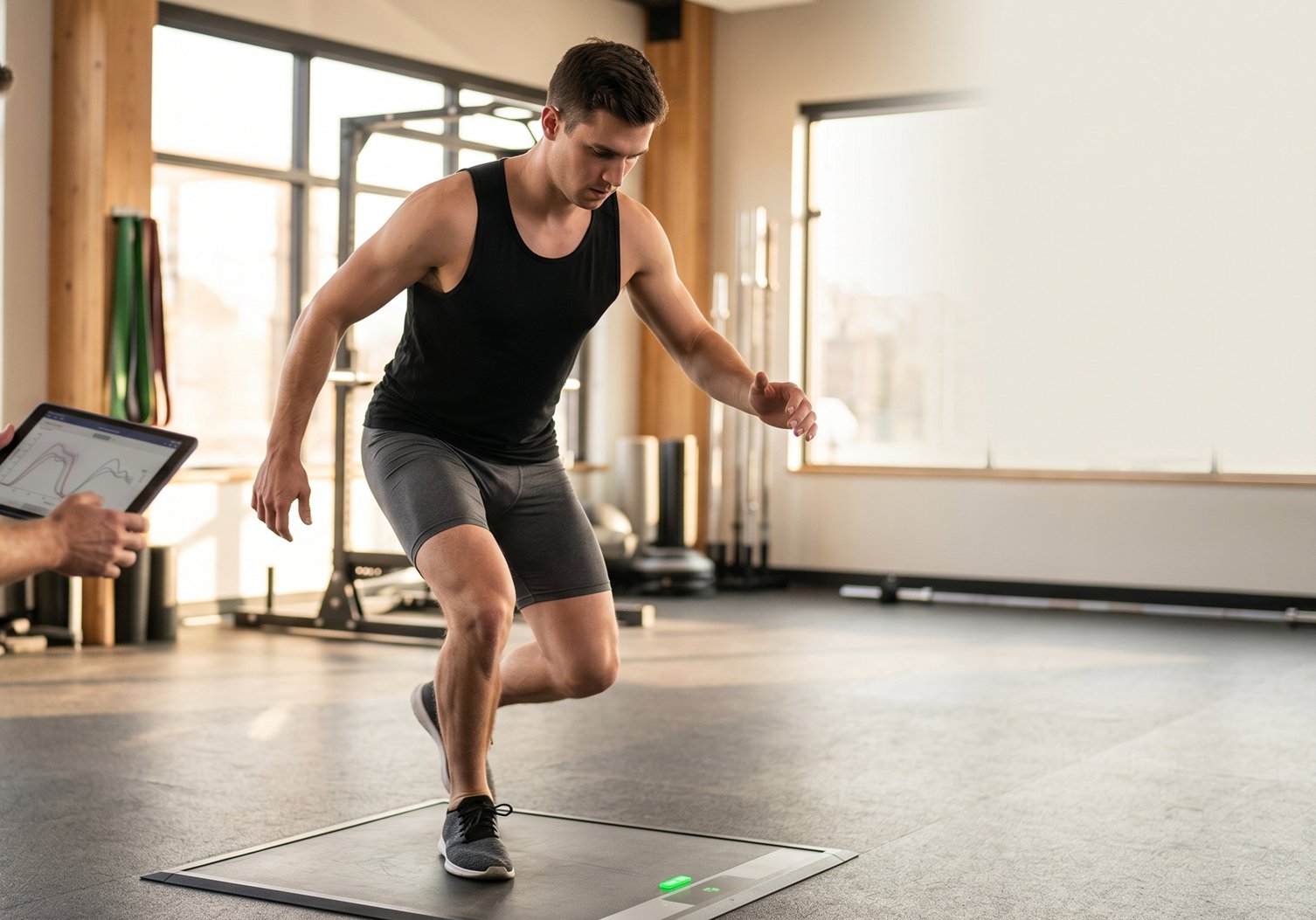
- Force plates measure asymmetries invisible to the naked eye - peak vertical force, rate of force development, deceleration impulse, push-off impulse - across single-leg countermovement jump, drop jump, and squat assessment.
- A modern lower-extremity RTS battery includes isokinetic quadriceps strength, single-leg hop quartet, force-plate jump testing, Y-balance, and sport-specific cutting tasks - all targeting limb symmetry index >=90% before clearance.
- At POW PT, the test battery drives the decision - not the calendar, not the season schedule, and not the athlete saying 'I feel fine.'
The Hook: Push-Off Is the Test, and It Doesn't Lie
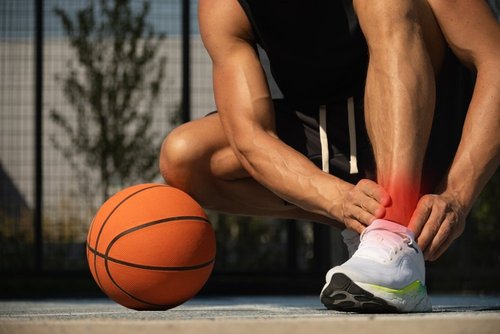
On May 15, 2026, Minnesota Wild center Joel Eriksson Ek told reporters that even after limited practice during the Avalanche series, he could not 'fully push off the foot on the ice.' He was talking about a calcaneal fracture, but he could have been describing any post-injury athlete in any sport. The return-to-sport conversation - in our clinic, in the NHL playoffs, in every high school physical therapy room in Pittsburgh - reduces to one question: when you load the leg under sport-specific demands, does it produce force the way the other leg does?
That is not a question you answer by feel. It is a question you answer with force plates, hop tests, isokinetic dynamometry, and timed cutting. At Power Performance Physical Therapy (POW PT), where Dr. Josh Lombardi, DPT, CSCS, leads our lower-extremity rehab, we have built our return-to-sport process around objective testing because the data are unambiguous: passing a criterion-based battery cuts the re-rupture risk after ACL reconstruction by roughly one-third, and athletes who push past their tests reinjure at strikingly higher rates.
The Science: Why Subjective Clearance Is Dangerous
The 11% problem
A widely cited prospective longitudinal study reported that only 11.3% of patients met all return-to-sport criteria 9 months after ACL reconstruction. In recent JOSPT and ESSKA-journal reviews, similar numbers appear across knee and ankle cohorts. In other words, the calendar marker most American patients are told to aim for ('see you back in clinic in 9 months') catches only about 1 in 9 athletes who are actually ready to play. That is a clearance problem, not a healing problem.
What force plates actually measure
Dual in-ground or portable bilateral force plates sampling at 1,000 Hz quantify the ground reaction force time series. From that one signal we extract more than 30 derived metrics that map to specific phases of a jump or landing:
- Peak vertical force - how forcefully each leg accelerates the body upward.
- Rate of force development (RFD) - how quickly that force is generated. This is what reactive athletes - skaters, jumpers, cutters - lose first after injury.
- Concentric impulse / propulsive impulse - the total push-off work done on the way up. This is the metric that maps directly to Eriksson Ek's 'can't push off.'
- Eccentric / deceleration impulse - work done absorbing the landing. Asymmetries here predict ACL re-injury.
- Limb symmetry index (LSI) - the percentage of each metric the surgical/injured limb produces compared to the contralateral limb. Standard threshold for clearance is >=90%, with some recent work pushing for >=95% on RFD and deceleration metrics.
The hop test battery and why it still matters
Single-leg hop testing - single hop for distance, triple hop, crossover triple hop, and 6-meter timed hop - remains the most widely validated functional RTS measure for ACL and lower-extremity injury. The hop battery captures things force plates do not: how confident the athlete is to land on the injured leg, and how they translate strength into horizontal force. Modern protocols combine the hop battery with force-plate jump testing for a more complete picture: vertical force capacity (force plate) and horizontal performance (hop quartet).
The POW PT Return-to-Sport Battery
Here is the testing battery we use at Power Performance Physical Therapy before clearing an athlete back to cutting or contact sport after foot, ankle, or knee injury:
- Isokinetic knee extensor strength (Biodex or equivalent) at 60 and 180 degrees/sec - target LSI >=90%.
- Single-leg countermovement jump (SLCMJ) on force plates - target LSI >=90% on jump height, peak force, RFD, and concentric impulse.
- Drop vertical jump with knee-valgus screening - target <10 degrees of knee valgus on landing.
- Hop quartet (single, triple, crossover triple, 6-m timed) - target LSI >=90% on all four hops.
- Y-balance / Star Excursion Balance Test - target LSI >=90% in anterior, posteromedial, and posterolateral reach.
- Sport-specific cutting tasks (505 agility, T-test) with video review of trunk and pelvic control.
- Psychological readiness via the ACL-RSI or similar validated questionnaire - target score >=65 before clearance.
The Solution at P.O.W. and POW PT
If you are coming back from an ankle sprain, ACL reconstruction, ankle stabilization, fifth metatarsal fixation, calcaneal fracture, or any lower-extremity surgery, do not let calendar time make your clearance decision. Here is the integrated P.O.W. workflow:
- Surgical or non-operative care under Dr. Prisk with sport-specific timelines built into the post-operative plan.
- Phase-based rehab at POW PT with Dr. Lombardi, anchored on blood flow restriction (BFR) for early quad and calf strength, progressive loading, and neuromuscular control work.
- Mid-rehab force-plate and hop testing at 12-16 weeks to identify lagging metrics before they become return-to-play failures.
- Final RTS testing battery at 6-9 months (knee) or 3-6 months (ankle/foot) with formal clearance documented in the chart.
- Sport-specific return-to-play progression with athletic-trainer-style supervision back into practice, then full participation.
Frequently Asked Questions
Why isn't 'I feel fine' enough?
Because the data say it is not. Athletes who self-clear after ACL reconstruction reinjure at higher rates than those who pass an objective RTS battery. Subjective feel underestimates persistent asymmetries in force production, rate of force development, and landing mechanics - which are the exact deficits that drive re-injury.
What is a force plate and do I really need it?
A force plate is a thin, stiff platform with strain gauges that measures the ground reaction force you produce during jumps, landings, and squats. For most lower-extremity RTS decisions in athletes, yes - it is the closest thing we have to a non-invasive lab-grade assessment, and it captures asymmetries that a stopwatch or a tape measure cannot see.
What LSI threshold should I aim for?
Greater than or equal to 90% on all RTS metrics is the standard. Recent work suggests pushing for >=95% on rate of force development and deceleration impulse, especially for cutting and pivoting sports.
How long does the testing take?
A complete RTS battery at POW PT runs about 60-90 minutes. We typically schedule it as a stand-alone visit when you are within 2-4 weeks of anticipated clearance.
What if I fail a test?
You do not fail - you find your deficit. We then write a 4-6 week corrective block of training targeting the specific metric (often RFD or landing mechanics), retest, and progress. The point of objective testing is not to gatekeep; it is to keep you off the operating table a second time.
Can I do this if I had ankle surgery, not ACL surgery?
Yes. Force-plate and hop-test batteries are validated for ACL reconstruction in the most depth, but the same principles apply to ankle stabilization (modified Brostrom), fifth metatarsal fixation, calcaneal fracture rehab, and Achilles tendon repair. The metrics shift - peak force and push-off impulse matter more than landing mechanics in many ankle/foot cases - but the framework holds.
Schedule with P.O.W.
If foot, ankle, or lower-extremity pain is keeping you off the field, ice, or stage, do not guess and do not Google your way through another season. Call Prisk Orthopaedics and Wellness, P.C. at (412) 525-7692 or book online at orthoandwellness.com. New patient evaluations typically available within a week.
About the Author
Victor R. Prisk, MD is a board-certified orthopaedic surgeon specializing in foot and ankle reconstruction and sports medicine, and is the CEO and Medical Director of Prisk Orthopaedics and Wellness, P.C. (P.O.W.) and its affiliated brands P.O.W.Fit and VRP Sciences. A former competitive bodybuilder and NCAA gymnast, he is the author of The Leucine Factor Diet and treats athletes from the recreational to the professional level. Dr. Prisk practices in the greater Pittsburgh region and accepts new patients at orthoandwellness.com.