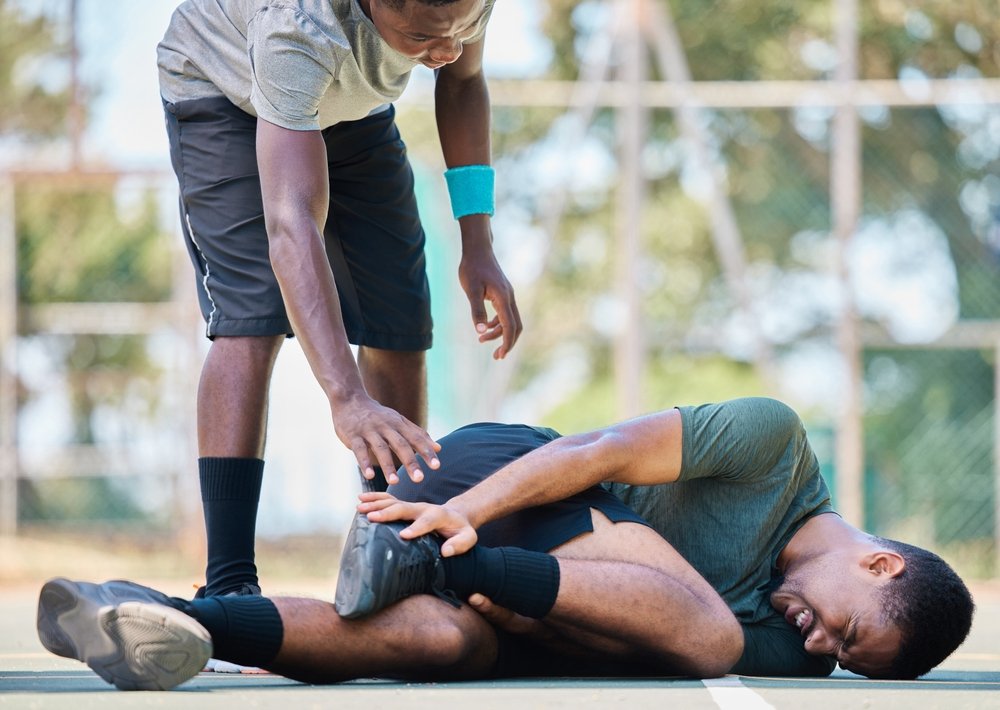
When Duke’s starting point guard Caleb Foster fractured his right foot during the Blue Devils’ rivalry win over North Carolina on March 8, 2026, the number-one team in the country was suddenly facing March Madness without a key player. Foster had surgery the next day, appeared on the bench in a walking boot, and his NCAA Tournament availability remains uncertain.
As a board-certified orthopedic surgeon specializing in foot and ankle injuries, I treat fractures like this every week, in competitive athletes, weekend warriors, and dancers alike. Fifth metatarsal fractures are among the most common and most misunderstood foot injuries in sports. Let me walk you through what likely happened, why this bone is so tricky, and what treatment and recovery really look like.
In This Article
- What Is a Fifth Metatarsal Fracture?
- Three Types of Fifth Metatarsal Fractures You Should Know
- Stress Fractures of the Foot: The Slow-Building Threat
- Why Basketball Players Are at High Risk
- Treatment Options: From Bone Stimulators to Surgery
- Recovery Timeline: When Can You Return to the Court?
- The Dance Medicine Connection
- Prevention Tips for Athletes
- Expert Foot & Ankle Care in Pittsburgh
What Is a Fifth Metatarsal Fracture?
The fifth metatarsal is the long bone on the outside of your foot that connects to your little toe. It bears significant load during lateral movements—the exact cutting, pivoting, and direction changes that basketball demands. A fifth metatarsal fracture is a break anywhere along this bone, and the location of the fracture dramatically changes the diagnosis, treatment, and prognosis.
This bone has a notoriously poor blood supply in certain zones, which is why some fifth metatarsal fractures heal easily while others require surgery or refuse to heal at all. Understanding the specific fracture type is the single most important factor in getting the right treatment.
Three Types of Fifth Metatarsal Fractures You Should Know
Not all fifth metatarsal fractures are created equal. The fracture’s location along the bone determines everything about treatment and recovery. Here are the three main types:
- Avulsion Fracture (Pseudo-Jones Fracture). This occurs at the very base of the fifth metatarsal, where the peroneus brevis tendon attaches. A sudden inversion or ankle-twisting mechanism pulls a small chip of bone away. These are the most common type and often heal well without surgery. Treatment typically involves a walking boot or hard-soled shoe, protected weight-bearing, and gradual return to activity over four to six weeks. I frequently use bone stimulators to accelerate healing in athletes who need to return quickly.
- Jones Fracture. This is the fracture that strikes fear into athletes and team physicians alike. A Jones fracture occurs at the junction between the base and the shaft of the fifth metatarsal, a watershed zone with limited blood supply. The poor vascularity makes these fractures prone to delayed healing, nonunion, and refracture. In competitive athletes, I often recommend surgical fixation with an intramedullary screw to compress the fracture site and promote healing. Nonoperative management with strict non-weight-bearing and bone stimulation is also an option in select cases, but the risk of nonunion is higher. When surgery is needed, bone grafting may be added to enhance healing potential.
- Dancer’s Fracture (Shaft Fracture). A spiral or oblique fracture of the mid-shaft of the fifth metatarsal, classically caused by a twisting mechanism on a planted foot. I see this injury frequently in ballet and modern dancers, the name is no coincidence. In my experience treating professional dancers from the Pittsburgh Ballet Theatre and dance companies worldwide, these fractures generally respond well to non-weight-bearing in a boot followed by careful rehabilitation. Displaced fractures may require surgical fixation to restore alignment and prevent malunion that could affect long-term foot mechanics.
Stress Fractures of the Foot: The Slow-Building Threat
Unlike acute fractures that happen in a single moment, stress fractures develop gradually from repetitive loading that exceeds the bone’s ability to remodel. The metatarsals are among the most common sites for stress fractures in athletes. The second and third metatarsals are particularly vulnerable, especially in athletes with specific foot morphologies.
Patients with a cavovarus foot alignment—a higher arch with a slightly turned-in heel—concentrate force along the lateral forefoot and are predisposed to fifth metatarsal stress fractures. Those with Morton’s foot, where the second metatarsal is longer than the first, are at higher risk for second metatarsal stress fractures because that bone absorbs disproportionate ground reaction forces with every step and landing.
Stress fractures often begin as a dull, activity-related ache that worsens over days to weeks. Swelling may be subtle or absent early on. Standard X-rays can miss early stress fractures, which is why advanced imaging such as MRI or weight-bearing CT may be needed to confirm the diagnosis. At our practice, we use state-of-the-art weight-bearing CT scans that allow us to evaluate the foot under physiologic load—giving us a more accurate picture of bone health and alignment than traditional imaging.
- Treatment for Stress Fractures. Most metatarsal stress fractures respond to nonoperative management: activity modification, protective footwear or a boot, and time. I frequently incorporate bone stimulators (low-intensity pulsed ultrasound or capacitive coupled electrical stimulation) to accelerate bone healing. Extracorporeal Pulse Activation Technology (EPAT), a form of shockwave therapy, is another tool we use to stimulate bone and soft tissue recovery without surgery.
When stress fractures fail to heal, or when the underlying biomechanical cause needs correction, surgery may be indicated. This can include internal fixation with bone grafting to provide structural support and biological stimulus for healing. In cases where cavovarus alignment or a long second metatarsal contributed to the stress fracture, realignment procedures—such as a metatarsal osteotomy or calcaneal osteotomy—may be performed to redistribute forces and prevent recurrence. Treating the fracture without addressing the root cause is a recipe for re-injury.
Why Basketball Players Are at High Risk
Basketball places enormous demands on the forefoot. Explosive acceleration, hard stops, lateral shuffling, vertical jumping, and landing on unforgiving hardwood surfaces all load the metatarsals repeatedly. The fifth metatarsal takes particular stress during lateral push-off movements—exactly the motions a point guard like Foster performs on every possession.
Research from the NFL Scouting Combine and NBA injury surveillance studies shows that Jones fractures are significantly more common in elite athletes than in the general population. NBA data reveals that approximately 15% of players who sustain a Jones fracture do not return to play in the season of injury. In the NFL, the incidence of Jones fractures among combine participants is nearly 1.8%—far exceeding the population rate. These numbers highlight how high the stakes are when this injury occurs in a competitive setting.
Factors that increase risk include high training volume, rapid increases in activity, playing on hard surfaces, a history of prior foot or ankle injuries, and underlying foot alignment issues like cavovarus morphology.
Treatment Options: From Bone Stimulators to Surgery
The treatment approach for a fifth metatarsal fracture depends on the fracture type, location, displacement, and the patient’s activity demands. Here is how I approach these injuries at Prisk Orthopaedics & Wellness:
Nonoperative Management. For avulsion fractures, non-displaced dancer’s fractures, and select Jones fractures in lower-demand patients, conservative treatment is often appropriate. This includes a period of immobilization in a walking boot or cast, protected or non-weight-bearing as indicated, and a structured return-to-activity protocol. Bone stimulators are a valuable adjunct—these devices deliver low-intensity ultrasound or electrical stimulation to the fracture site to enhance osteogenesis. I prescribe them routinely when I want to optimize healing speed and reduce nonunion risk.
EPAT / Shockwave Therapy. For stress fractures and stress reactions, EPAT can be used to stimulate blood flow, enhance bone remodeling, and relieve pain. It is a non-invasive outpatient treatment that I incorporate into the recovery plan alongside activity modification and bone stimulation. EPAT may also be used adjunctively following surgical fixation to promote tissue healing.
Surgical Fixation. When surgery is indicated, particularly for Jones fractures in competitive athletes or fractures that fail to heal, the gold standard is intramedullary screw fixation. A single screw is placed down the canal of the metatarsal to compress the fracture and provide rigid stability. In cases with poor bone quality, a history of nonunion, or need for biological enhancement, I supplement with bone grafting. Autograft from the patient’s own calcaneus or allograft may be used depending on the clinical scenario.
Realignment Surgery. For patients with recurrent stress fractures driven by underlying alignment issues, corrective procedures may be needed. A cavovarus foot that concentrates lateral column overload can be addressed with a dorsiflexion osteotomy of the first metatarsal or a lateralizing calcaneal osteotomy. A symptomatic long second metatarsal contributing to central overload can be shortened with a Weil osteotomy. By correcting the biomechanical driver, we reduce the risk of future fractures—not just treat the current one.
Recovery Timeline: When Can You Return to the Court?
Recovery depends heavily on the fracture type and treatment approach:
Avulsion fractures: Four to six weeks in a boot, with return to sport typically by eight to ten weeks. Bone stimulator use may accelerate this timeline.
Jones fractures (surgical): Non-weight-bearing for approximately six weeks following screw fixation, with progressive loading beginning around six to eight weeks. Return to competitive sport typically occurs at three to four months, depending on imaging confirmation of healing and functional testing.
Jones fractures (nonoperative): Non-weight-bearing for six to eight weeks with bone stimulator use, followed by a gradual return over several months. The risk of delayed union or nonunion is higher with this approach, and total recovery time may extend to four to six months or longer.
Stress fractures: Most heal with six to eight weeks of modified activity and bone stimulation. Fractures requiring surgical intervention, particularly with realignment, may take three to four months before full return to sport.
Regardless of the fracture type, I emphasize a criteria-based return to play—not just a calendar-based one. The athlete must demonstrate radiographic healing, pain-free weight-bearing, full range of motion, and successful completion of sport-specific functional testing before clearance.
The Dance Medicine Connection
My perspective on forefoot fractures is shaped by years of treating professional ballet dancers, competitive gymnasts, and performing artists. Dancers and basketball players share more in common than you might think: both rely on explosive forefoot loading, rapid directional changes, and precise footwork performed at high intensity. Basketball players simply have bigger feet dancing the court as their stage.
Working with dancers has taught me that every millimeter of alignment matters. A subtle cavovarus tendency or a slightly long second ray can be the difference between a career-defining season and months on the sideline. This same philosophy guides my approach with every athlete I treat—whether they are performing a grand jeté, driving to the basket, or simply returning from a morning run. Treating the fracture is only half the job. Identifying and addressing the biomechanical why is what prevents the next injury.
Prevention Tips for Athletes
While you cannot eliminate fracture risk entirely, several strategies can significantly reduce your chances of sustaining a metatarsal fracture:
- Increase training volume gradually—the “10% rule” is a useful guideline for ramping mileage, court time, or rehearsal hours.
- Wear footwear appropriate for your sport with adequate forefoot support and cushioning. Replace worn shoes before they lose their structural integrity.
- Address underlying foot alignment issues proactively. If you have high arches, chronic lateral foot pain, or recurrent ankle sprains, a biomechanical evaluation can identify correctable risk factors.
- Optimize nutrition. Calcium, vitamin D, and adequate caloric intake are essential for bone health. Female athletes and dancers should be vigilant about Relative Energy Deficiency in Sport (RED-S), which significantly increases stress fracture risk.
- Cross-train to vary the repetitive loading patterns on your feet. Low-impact alternatives such as swimming or cycling can maintain fitness while giving your bones recovery time.
Expert Foot & Ankle Care in Pittsburgh
At Prisk Orthopaedics & Wellness in Monroeville and Pittsburgh, PA, we specialize in the diagnosis and treatment of foot and ankle injuries in athletes of all levels. From fifth metatarsal fractures and stress fractures to Achilles tendon injuries and ankle instability, Dr. Victor Prisk provides personalized, evidence-based care designed to get you back to the activities you love.
Our practice offers advanced diagnostics including weight-bearing CT, in-office bone stimulators, EPAT shockwave therapy, and both operative and nonoperative fracture management. Whether you are a competitive athlete, a dancer, or someone who simply wants to walk without pain, we are here to help.
Schedule a consultation today: Call 412-525-7692 or visit orthoandwellness.com/appointment_request to request an appointment.
Medical Disclaimer: This blog post is for informational purposes only and does not constitute medical advice. Every patient’s situation is unique. Please consult with a qualified healthcare provider for diagnosis and treatment options specific to your condition.
